


Mindfulness-Based Stress Reduction (MBSR) is a structured course that teaches people to notice stress, body sensations, and thoughts with greater awareness, then choose how to respond. It is designed for people who want guided practice, not a quick relaxation trick or a substitute for medical care. Here is how the course works, what participants commonly practice, and how to judge whether it fits your needs.
Key takeaways
- MBSR is commonly taught over eight weeks, with instructor-led classes and regular home practice.
- Core exercises include body awareness, sitting meditation, and gentle mindful movement.
- The aim is to build a more deliberate response to stress, not to eliminate every difficult thought or feeling.
- Course formats differ, and mindful practice can be adapted if a particular exercise feels uncomfortable.
MBSR builds a pause between stress and action
MBSR works by helping participants recognize what is happening in the present moment before reacting automatically. During a stressful conversation, for example, someone might notice a clenched jaw, a rapid stream of thoughts, and an urge to interrupt. That awareness creates an opportunity to pause and choose a response more intentionally.
This is not a promise to feel calm all the time. The practical skill is learning to observe sensations, thoughts, and emotions without immediately treating them as commands or facts. Over time, that may support more thoughtful choices in daily life, including at work and in relationships.
Mindfulness practice can complement broader self-observation skills, such as tools for emotional self-observation. MBSR itself follows a specific curriculum and should not be confused with any single meditation exercise.
An eight-week course combines classes with home practice
A standard MBSR course is commonly organized across eight weeks. Participants typically attend a weekly group session, practice between classes, and may take part in a longer guided practice day. Exact class duration, retreat timing, and daily practice expectations vary by instructor and program, so confirm the schedule before signing up.
Home practice matters because the course is meant to bring attention skills into ordinary situations, not only the classroom. A typical week may ask participants to set aside time for a guided body scan, sitting practice, or mindful movement. If a program recommends a substantial daily commitment, consider whether that is realistic alongside your work, caregiving, and health needs.
Group sessions usually combine guided exercises with discussion and reflection. The group format can help participants notice how stress appears differently across people, while an instructor can offer options for adjusting a practice. The point is not to perform meditation correctly, but to learn from direct experience.
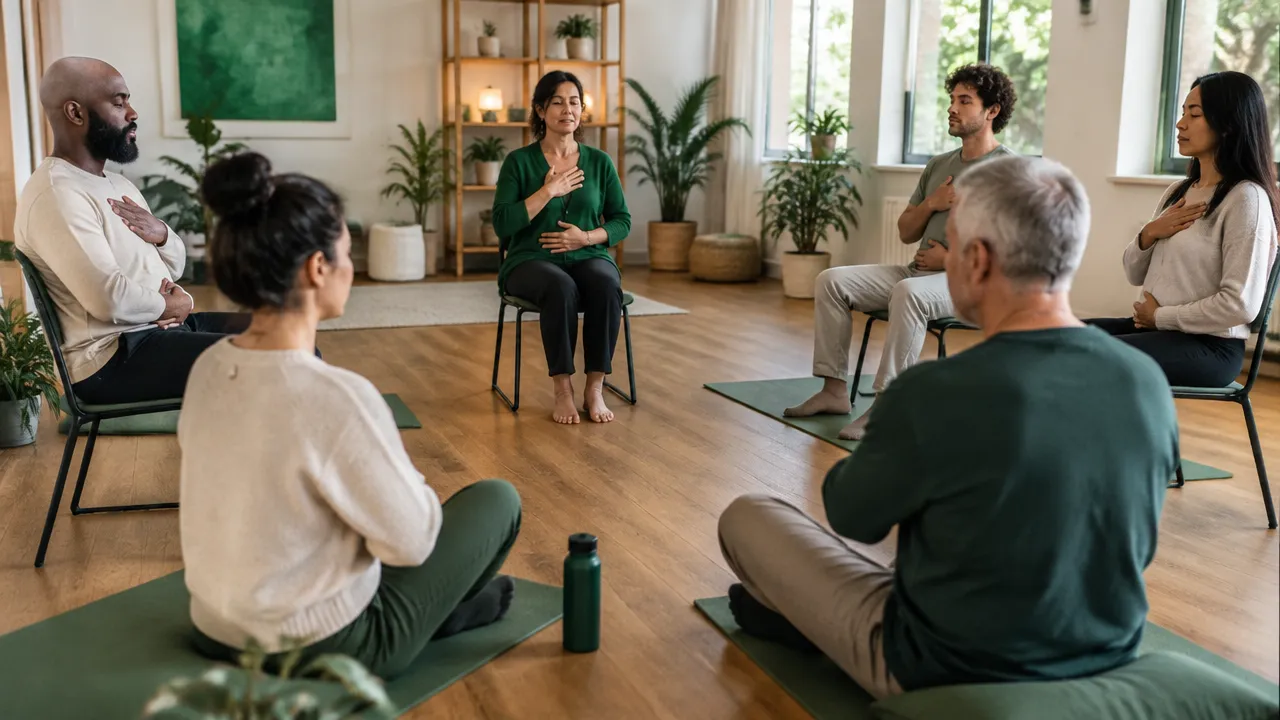
Body scans, sitting practice, and movement train different kinds of attention
MBSR uses several practices because stress can show up in the body, in attention, and in habitual thinking. The exercises are related, but each gives participants a different way to observe experience.
- Body scan: Attention moves through areas of the body, noticing sensations without needing to change them.
- Sitting meditation: Participants anchor attention, often with the breath, and practice returning when the mind wanders.
- Mindful movement: Gentle movement or stretching brings awareness to posture, effort, and physical limits.
- Everyday mindfulness: Ordinary activities become opportunities to notice attention, reactions, and surroundings.
These exercises are not tests of concentration. A wandering mind is expected; noticing that it wandered and returning attention is part of the training. If focusing on the breath or body feels difficult, a participant can ask about using an external sound, keeping their eyes open, changing position, or taking a break.
For a broader view of how mindfulness differs from formal meditation, explore this guide to mindfulness and meditation practice.
Benefits depend on the person, the course, and the goal
MBSR is intended to help people develop practical ways of relating to stress, discomfort, and difficult thoughts. Some participants seek support in coping with ongoing health challenges; others want to become less reactive in daily situations. Individual experiences vary, and completing a course does not guarantee a particular health outcome.
It is useful to distinguish skill-building from treatment claims. Mindfulness exercises may be one part of a broader care plan, but they do not diagnose or treat every cause of stress, pain, anxiety, or low mood. People managing a health condition should discuss changes to care with their clinician rather than replacing treatment with meditation.
One practical way to assess fit is to define a modest, observable goal before starting. For instance, you might want to notice tension earlier during meetings, practice a short pause before responding to conflict, or build a consistent routine. Reviewing that goal during the course can make progress more concrete than expecting to feel peaceful after every session.
Choose a course that offers clear guidance and room to adapt
Before enrolling, check who teaches the course, what the weekly time commitment is, and how the program handles discomfort or accessibility needs. Ask whether sessions are online or in person, what home practice involves, and how participants can contact the instructor with questions.
MBSR is a structured program, but the experience is not identical across providers. Some offer online delivery or different scheduling arrangements. Be cautious of claims that promise a guaranteed result, and look for a course description that explains both the practices and their limits.
If you are exploring meditation to build steadier responses under pressure, you may also find practical ideas in this guide to small meditation habits for resilience. A shorter practice can be a useful starting point, even though it is not equivalent to the full course.
Frequently asked questions
Is MBSR an eight-week program?
Most MBSR courses follow an eight-week format, with one instructor-led class each week and regular home practice. Many include a longer guided practice day, often called a retreat. Class length, online options, and schedules vary by provider, so check the course details before enrolling.
Can you do MBSR on your own?
Yes, you can learn basic mindfulness practices on your own, but that is not the same as completing a structured MBSR course. A class adds a planned sequence, instructor guidance, group discussion, and support for adapting exercises. If practicing alone, start gently and seek guidance if the exercises feel overwhelming.
Who might MBSR not be suitable for?
MBSR may not feel suitable for everyone at every moment. Extended stillness or attention to bodily sensations can feel difficult for some people, including those experiencing intense distress or trauma-related symptoms. You can pause, adapt, or stop an exercise, and discuss your situation with a qualified health professional or instructor before beginning.
Is MBSR worth it?
MBSR may be worth considering if you want structured practice and can make time for classes and home exercises. Its value depends on your goals, access to a suitable instructor, and willingness to practice. It is a skills program, not a guaranteed cure or a replacement for medical or mental health care.
What does a typical MBSR schedule include?
MBSR is commonly offered as an eight-week course, but details vary. Many programs include weekly instructor-led sessions, frequent home practice, and a longer practice day. Ask the provider about class length, accessibility, instructor qualifications, and whether the format is online or in person before deciding.